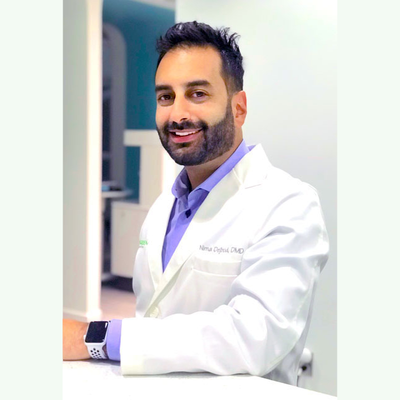
Puyallup's Root Canal Specialist, 45 Minutes Up the Valley
When a tooth is on the line, South Hill patients don't gamble on whoever happens to be closest. Dr. Nima Dejbod's Issaquah practice sits 45 minutes up SR-167 — microscope precision, three levels of sedation, and in-network pricing you approve before anything starts.
Dr. Dejbod · trusted by Puyallup's referring dentists
10,000+
Root Canals Completed
400+
Five-Star Reviews
14x
Microscope Precision
Same-Day
Emergency Slots
Seattle Met Top Dentist 2026VP, WA State Assoc. of EndodontistsAAE MemberNot Corporate-Owned
In serious pain today?
A dental abscess doesn't care about your commute. Call at 7:30 and Puyallup patients can often be numbed before the northbound backup on SR-167 even forms — same-day emergency slots are protected every business day.
A deep cavity — or a crack that ran quietly for years — opens a path for bacteria into the pulp, the living nerve tissue at your tooth's core. Inflammation trapped inside a rigid chamber produces the throbbing that brought you here.
02
What treatment does
Under a surgical microscope, Dr. Dejbod clears out the infected pulp, scrubs and disinfects each canal down to its tip, then seals the whole system so reinfection has nowhere to start.
03
What you walk away with
Your own tooth, minus the infection. Chewing stops hurting, sleep comes back, and your Puyallup dentist finishes the job with a crown a few weeks later.
Specialist vs. Generalist
Is the Drive from Puyallup Worth It?
Fair question — South Hill has plenty of dentists. Here's what changes when your tooth is treated by someone who does nothing but root canals, all day:
Evergreen Endodontics
Typical General Office
Training
Two to three additional residency years after dental school, spent entirely on diagnosing tooth pain and saving natural teeth
A broad dental degree covering everything from cleanings to dentures — endodontics included, but not the focus
Volume
10,000+ root canals completed — this procedure is the entire day, not an occasional slot
Often one or two root canals a week, fitted between crowns and fillings
Magnification
Every case runs under a surgical microscope at up to 14x — calcified canals and hairline cracks stay visible
Typically 2.5x loupes or unaided vision, which can overlook fine canal anatomy
Sedation
Nitrous, oral medication, or IV sedation — chosen with you, not for you
Depends on the office; true IV sedation rarely exists outside specialty settings
The Hour Itself
How a Puyallup Visit Unfolds
One focused appointment, roughly 60 to 90 minutes, and the throb is behind you.
1
Diagnose & Scan
A targeted exam and digital X-rays, with a 3D CBCT scan when the roots demand a closer look — findings shown to you on screen, not just described.
2
Plan & Price
The diagnosis, your options, and the exact fee, laid out in plain English. Nothing moves forward until you say so.
3
Numb & Treat
Deep local anesthesia first, microscope work second, sedation whenever you want it. Most Puyallup patients are back on SR-18 within the hour.
Anxiety? Handled.
Pick Your Comfort Level
Being nervous about a root canal is the normal human setting. Choose how aware you want to be while we work:
Option
How It Feels
Best For
Nitrous Oxide
Warm, weightless ease that lifts within minutes — you can drive yourself home afterward
Light nerves, shorter visits
Oral Sedation
One prescription tablet taken ahead of time; you stay responsive but deeply at ease, with hazy recall afterward
Real anxiety, molars, longer cases
IV Sedation
Twilight-level sedation titrated continuously by Dr. Dejbod — most patients remember nothing at all
High fear, surgical procedures, sensitive gag reflexes
Equipment With a Purpose
Why Specialist Tools Change Outcomes
Teeth get saved or lost based on what the operator can see. Our room is built so nothing stays invisible:
◆
Surgical Microscope
At up to 14x, canal openings the width of a hair become impossible to miss.
◆
3D CBCT Imaging
A three-dimensional map of every root curve, fracture line, and infection pocket before treatment starts.
◆
Digital X-Rays
Low-dose images on screen in seconds — diagnosis happens with you, not after you leave.
◆
Apex Locator
Electronic confirmation that every canal was cleaned to its full length — no guesswork at the root tip.
Patient Voices
Reviews Written After the Relief
Pulled from more than 400 five-star reviews — including cases other offices called hopeless.
★★★★★
“
My dentist thought the tooth might not be savable. Dr. Dejbod found the hidden canal under the microscope and saved it.
— Priya K., Kirkland
Complex case
★★★★★
“
The cost was exactly what they quoted before starting. No surprises, no pressure — just relief.
— Tom H., Issaquah
Transparent pricing
★★★★★
“
Seen the same day for a cracked tooth. I walked in barely able to think straight from the pain and left wondering why I waited so long.
— James R., Newcastle
Emergency visit
One patient, one tooth, full attention
The Specialist Puyallup Dentists Call
“A good number of my Puyallup patients arrive with a tooth someone else wanted to pull. Sometimes extraction is honestly the right call — and I'll say so. But when the microscope shows me a tooth that can still be saved, saving it is the best value in dentistry.”
Dr. Nima Dejbod, DMD · Washington State native · UW graduate · Seattle Met Top Dentist 2026 · Vice President, WA State Association of Endodontists
PPO contracts fix the fees, so an in-network specialist costs the same as an in-network generalist. The real decision is who performs the procedure. Insured patients with benefits left typically pay $160–$655 out of pocket.
Root Canal
Typical In-Network Rate
Without Insurance
Front tooth (anterior)
~$800 in-network contracted rate
from ~$1,300 without insurance
Premolar (bicuspid)
~$1,000 in-network contracted rate
from ~$1,500 without insurance
Molar
~$1,300 in-network contracted rate
from ~$1,900 without insurance
You approve the full cost in writing before we begin — surprise bills are not how we operate. Get a personalized estimate →
Insurance plans we verify daily for Puyallup
Delta Dental
Regence Blue Shield
Premera Blue Cross
Cigna
Aetna
Guardian
MetLife
United Healthcare
Principal
Ameritas
+11 more plans
Good Samaritan Hospital staff, Puyallup School District employees, and South Hill's major employers all carry plans we work with constantly — we confirm your benefits before the appointment, so the number you hear is the number you pay.
Getting Here
From Puyallup to Pain-Free in 45 Minutes
The route is simple: SR-167 north to SR-18 east, then Issaquah-Hobart Road to our door at 600 NW Gilman Blvd. Book the 7:30 AM slot and you'll drive against the worst of the commute — most South Hill patients are treated and home again before lunch. Puyallup dentists send us the teeth they couldn't save because the drive is short and the save rate is high. Parking is free, steps from the door.
From South Hill to Sumner, Edgewood to Enumclaw, the eastern Pierce County corridor reaches our Issaquah office in about 45 minutes. Spot your community below — this page was written for you.
How long does it actually take to get there from Puyallup?
Figure on about 45 minutes from most of Puyallup: SR-167 north to SR-18 east, then Issaquah-Hobart Road into Issaquah. From South Hill it is often quicker outside rush hour, and early-morning appointments run against the commute.
Will a 7:30 AM appointment really beat the northbound traffic?
Yes — that is exactly why early slots exist. Leave South Hill around 7 and SR-167 is still moving. Most first-slot patients are numb by 7:45, treated by about 8:45, and back home before midday.
My Puyallup dentist said the tooth might be too far gone. Why would you do better?
Two reasons: magnification and repetition. Dr. Dejbod has completed more than 10,000 root canals under a surgical microscope, and much of his referral work is teeth other offices considered unsavable — hidden canals, hairline cracks, failed first attempts. And if a tooth genuinely cannot be saved, he will tell you before you spend a dollar on it.
Do you accept plans from Good Samaritan or the Puyallup School District?
We are in-network with the major PPO carriers common across those employers — Delta Dental, Regence, Premera, Cigna, Aetna, MetLife and more. Benefits are verified before treatment, so your share is settled in advance.
What should I budget for a root canal with insurance?
Contracted in-network rates run about $800 for a front tooth, $1,000 for a premolar, and $1,300 for a molar. With benefits remaining, most insured patients land between $160 and $655 out of pocket — quoted and approved before any work begins.
Be honest — how much does a root canal hurt?
The procedure itself should not hurt at all: profound numbing comes first, and sedation is available if you are anxious. The ache people remember is usually the infection they arrived with, not the treatment. Most patients manage the next day or two with ibuprofen.
For Referring Dentists
Refer Your Patient to Dr. Dejbod
Puyallup patients reach us before the commute builds with 7:30 AM slots; every referral returns with imaging and a same-day report.
Medically reviewed by Dr. Nima Dejbod, DMD, endodontist and Vice President of the Washington State Association of Endodontists. About Dr. Dejbod
Last medically reviewed:
This content is for informational purposes only and is not a substitute for professional medical advice, diagnosis, or treatment. Always consult your dentist, physician, or another qualified health provider with any questions about a dental condition.