Root Canal Specialists · Federal Way, WA
When It's More Than a Filling: Federal Way's Root Canal Specialist
Federal Way has plenty of offices for routine work — cleanings, fillings, crowns. But when a molar needs saving or an old root canal fails, the 35–40 minute drive up SR-18 to Dr. Nima Dejbod is the difference between keeping a tooth and losing it.
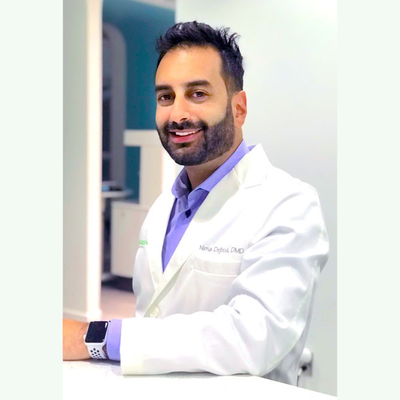
Dr. Dejbod · 35–40 minutes from Federal Way via SR-18 E
Tooth pain hijacking your week?
We hold same-day emergency slots every business day for severe pain, swelling, and trauma. Leave Federal Way on SR-18 and you can be numb in the chair roughly an hour after you call.
The Basics
Root Canals, Minus the Scary Reputation
The problem
Deep inside every tooth sits soft tissue with a nerve and blood supply. A crack, deep decay, or leaking restoration lets bacteria in — and the resulting infection is where the pain lives.
The treatment
Under up to 14x magnification, Dr. Dejbod removes that infected tissue, disinfects the canal system completely, and seals it tight against reinfection.
The outcome
You keep the tooth, lose the pain, and return to your Federal Way dentist for the crown. Chewing on that side feels normal again within days.
Specialist vs. Generalist
Why Federal Way Dentists Refer Their Toughest Cases North
If you need a filling, stay local — your Federal Way dentist has you. If a tooth's survival is in question, here's what a specialist adds:
| Evergreen Endodontics | Typical General Office | |
|---|---|---|
| Training | Two to three years of specialty residency beyond dental school, all of it endodontics | A general degree that covers endodontics among many other disciplines |
| Volume | 10,000+ completed root canals — complex molars and retreatments are our daily routine | Root canals sprinkled a few times a month into a mixed schedule |
| Magnification | A surgical microscope on every case, finding the canals that decide whether a tooth survives | Loupes or the naked eye — fine for fillings, limiting for retreatments |
| Sedation | Full menu: nitrous, oral, and IV sedation matched to your anxiety level | Usually nitrous only, if that |
Your Visit
Your Visit, Hour by Hour
One trip up SR-18, about an hour in the chair, back home with the tooth saved.
Look Closely
Digital X-rays and a careful exam first; a 3D CBCT scan when the tooth's history is complicated. Nothing is hidden from you.
Decide Together
We walk you through findings, options, and the complete cost. Treatment waits for your explicit go-ahead.
Treat Gently
Profound numbing first — always — then microscope-guided care with sedation if you chose it. Sixty to ninety minutes, typically.
Comfort Menu
Comfort Is a Choice, Not a Bonus
Many Federal Way patients arrive having white-knuckled dental visits for years. Here, you choose the dial:
| Option | How It Feels | Best For |
|---|---|---|
| Nitrous Oxide | Warm, weightless relaxation that fades completely by the time you head to the car | Mild unease, routine procedures |
| Oral Sedation | A simple pill before your visit wraps the appointment in deep calm, with little memory of it | Moderate anxiety, longer sessions |
| IV Sedation | The deepest conscious sedation in dentistry, precisely controlled by Dr. Dejbod throughout | Severe anxiety, retreatments, surgical cases |
The Instrument Room
The Room Where Borderline Teeth Get Saved
Retreatments and calcified molars are won or lost on visibility. Our instrument room is built for exactly that:
Surgical Microscope
Magnifies the field up to 14x — the difference between finding a canal and guessing.
3D CBCT Imaging
Reveals why the last root canal failed before we ever touch the tooth.
Digital X-Rays
Immediate, low-dose imaging, shared with you on the monitor.
Apex Locator
Electronic confirmation that every canal is cleaned to its endpoint.
Patient Voices
Patients, After the Appointment
Three voices from our 400+ five-star reviews.
I was terrified of getting a root canal, but Dr. Nima and his team made me feel so comfortable. The sedation helped me relax completely, and I barely felt anything. I can't believe how easy it was.
— Sarah M., SammamishHe explained the procedure, what to expect, and how to care for it afterward. Nothing felt rushed.
— Michael R., BellevueSeen the same day for a cracked tooth. I walked in barely able to think straight from the pain and left wondering why I waited so long.
— James R., NewcastleWhere 'maybe not savable' gets a second look
Meet Dr. Nima Dejbod
“Federal Way patients often arrive with a tooth that's been sentenced to extraction. My favorite sentence in dentistry is 'let's look under the microscope first' — because very often that tooth still has a fight left in it. And so do I.”
Dr. Nima Dejbod, DMD · Washington State native · UW graduate · Seattle Met Top Dentist 2026 · Vice President, WA State Association of Endodontists
Cost & Insurance
The Number You'll See Before We Touch a Tooth
Because insurers contract the rates, in-network fees are the same at every in-network office. With benefits left this year, most insured Federal Way patients pay $160–$655 out of pocket.
| Root Canal | Typical In-Network Rate | Without Insurance |
|---|---|---|
| Front tooth (anterior) | ~$800 in-network contracted rate | from ~$1,300 without insurance |
| Premolar (bicuspid) | ~$1,000 in-network contracted rate | from ~$1,500 without insurance |
| Molar | ~$1,300 in-network contracted rate | from ~$1,900 without insurance |
You approve the total in writing before treatment — no exceptions, no surprise bills. Get a personalized estimate →
Plans we verify daily for Federal Way patients
- Delta Dental
- Regence Blue Shield
- Premera Blue Cross
- Cigna
- Aetna
- Guardian
- MetLife
- United Healthcare
- Principal
- Ameritas
- +11 more plans
Federal Way's healthcare systems, retail campuses, and corporate offices offer PPO plans we verify constantly — your benefits get confirmed before you sit down.
Getting Here
Federal Way to Our Office: 35–40 Minutes
Take SR-18 east past Covington, then Issaquah-Hobart Road north into Issaquah. From Dash Point, Twin Lakes, or Lakota, you're on SR-18 within minutes, and the route dodges the I-5 crawl entirely. Is it worth 40 minutes for a filling? No — stay local for that. For a molar with curved roots, a retreatment, or a tooth that's been called questionable, this drive is exactly why the tooth survives.
Get Directions via SR-18 EEvergreen Endodontics
600 NW Gilman Blvd Suite A
Issaquah, WA 98027
Phone: (425) 697-9777
Fax: (425) 697-9778
Email: info@EvergreenEndo.com
Hours: Monday–Friday, 7:30 AM – 5:00 PM
Parking: Free, directly at the building
Service Area
Serving Federal Way & the Southwest Sound
From Dash Point's waterfront to the Lakota fairways, Federal Way patients make the SR-18 trip whenever a tooth needs a specialist. Communities we see weekly:
- Federal Way
- Dash Point
- Twin Lakes
- Lakota
- Auburn
- Des Moines
- Kent
- Covington
- Issaquah
- Tacoma
Root canal care in neighboring cities
Questions
Federal Way Root Canal FAQs
Real questions from Federal Way patients, answered straight.
Is it really worth driving 35–40 minutes from Federal Way?
For routine dentistry, no — your Federal Way dentist handles that well. For a molar with curved roots, a failed previous root canal, or a tooth called questionable, specialist microscopy and 10,000+ cases of experience are exactly what changes the outcome. That is worth one drive.
What route should I take from Dash Point, Twin Lakes, or Lakota?
All three feed SR-18 within minutes. Take SR-18 east past Covington to Issaquah-Hobart Road north, which runs straight to our office at 600 NW Gilman Blvd Suite A in Issaquah. Parking is free at the door.
My old root canal is hurting again. Can that be fixed?
Often, yes. Retreatment is a core part of what we do: under the microscope we find the canal or crack the first treatment missed, disinfect the system, and reseal it. The 3D CBCT scan usually shows us exactly why it failed before we begin.
How much does a root canal cost with insurance?
With in-network coverage, expect about $800 for an anterior tooth, $1,000 for a premolar, and $1,300 for a molar under your plan's contracted fees. Insured patients with remaining benefits typically pay $160–$655 out of pocket — we verify your plan and quote your exact share first.
I'm terrified of the dentist. Can you help?
That is half of what we do. Nitrous oxide takes the edge off, oral sedation makes the visit a drowsy blur, and IV sedation is available for deep anxiety. Many of our most fearful patients now tell friends the appointment was easy.
How do I know you won't recommend treatment I don't need?
Every diagnosis comes with images you see yourself and a plain-language explanation of every option, including doing nothing. You approve the plan and the cost before anything begins — that sequence never changes.
For Referring Dentists
Refer Your Patient to Dr. Dejbod
For Federal Way molars and retreatments, your patients get microscope precision and you get the full report the same day.
Ready When You Are
A tooth on the line is worth the drive.
Same-day emergency slots · three sedation levels · pricing you approve first.